
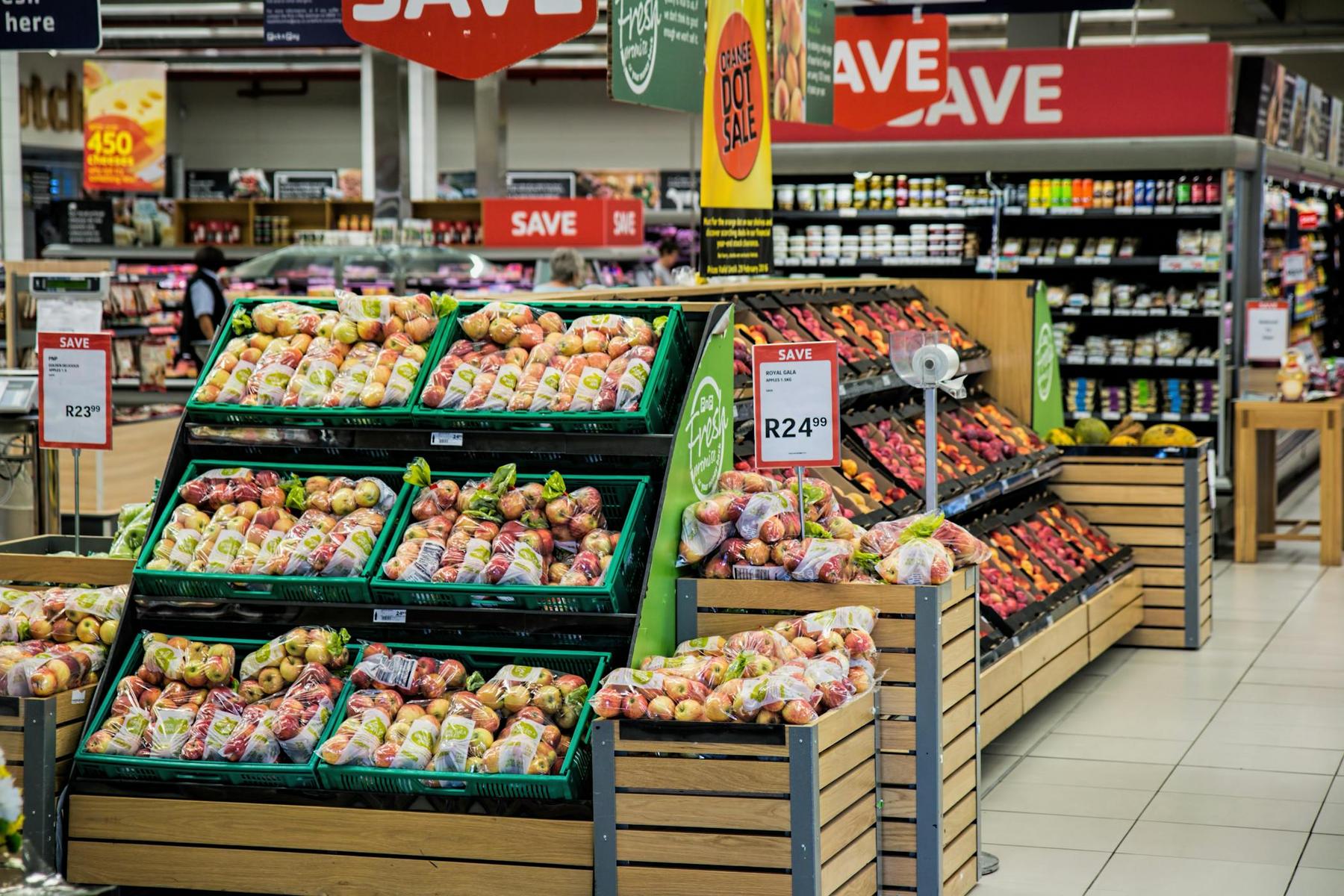
If you’re a student staring at your bank account whilst standing in front of a supermarket shelf, you’re not alone. With 86% of Australians worried about rising food costs and grocery bills causing genuine financial stress for 39% of households, students—already juggling rent, textbooks, and transport—feel the squeeze hardest. The average Australian household now spends $178 per week on groceries, representing a 6% increase from 2024, and for students living on tight budgets, every dollar genuinely matters.
When a single grocery shop can represent 20-30% of your weekly budget, choosing between Aldi, Coles, and Woolworths isn’t just preference—it’s financial strategy. Let’s break down the real numbers, expose the actual savings, and equip you with practical knowledge to cut your grocery bills without surviving on two-minute noodles alone.
Which Australian Supermarket Is Actually Cheapest for Students in 2025?
Here’s the straightforward answer backed by CHOICE’s September 2025 independent price survey: Aldi consistently wins on price, and it’s not even close. When researchers compared a basket of 20 common items across Australia’s major supermarkets, Aldi came in at $72.41, whilst Woolworths charged $98.98 and Coles hit $100.04. That’s a difference of $26-28 per shop — money that adds up to roughly $1,400 annually if you’re shopping weekly.
But let’s dig deeper into what those numbers actually mean for your student budget:
| Supermarket | 20-Item Basket (No Specials) | 20-Item Basket (With Specials) | 7-Item Base Basket | Home-Brand Basket |
|---|---|---|---|---|
| Aldi | $72.41 | $72.41 | $31.41 | $53.50 |
| Woolworths | $98.98 | $93.17 | $32.20 | $56.75 |
| Coles | $100.04 | $100.04 | $33.16 | $55.85 |
| IGA | $109.25 | $105.38 | $39.20 | N/A |
Source: CHOICE Supermarket Price Survey, September 2025; Canstar Blue 2025
Notice something interesting? Aldi’s prices remain identical whether you shop specials or not—they simply maintain everyday low prices rather than playing the psychological game of inflating prices then “discounting” them. Meanwhile, Woolworths shoppers hunting specials save $5.81 per basket, but still pay $20.76 more than Aldi shoppers who don’t need to strategise at all.
For students managing tight budgets, this translates into real breathing room. Shopping at Aldi versus Woolworths saves approximately $1,352–1,924 annually based on average weekly shopping patterns. That’s textbooks, a semester’s worth of transport passes, or a genuine emergency fund.
However—and this matters if you’re studying in Tasmania or the Northern Territory—Aldi operates 605+ stores across only six states and territories (NSW, Victoria, Queensland, WA, SA, and ACT). If you’re outside Aldi’s coverage, Woolworths becomes your best bet, particularly when leveraging their weekly specials effectively.
How Much Can Students Really Save Shopping at Aldi vs Woolworths and Coles?
The savings aren’t just theoretical—they’re substantial enough to materially impact your student lifestyle. Let’s translate those basket comparisons into realistic monthly and annual figures.
Weekly shopping scenario: A typical student spending $80–150 per week on groceries (the recommended range for cooking at home) can expect these annual totals:
- Shopping exclusively at Aldi: Approximately $4,160–7,800 annually
- Shopping at Woolworths (with specials): Approximately $4,845–9,085 annually
- Shopping at Coles: Approximately $5,202–9,752 annually
That’s a potential difference of $685–1,952 per year between Aldi and Coles—enough to cover a return flight home during semester break or substantially reduce your reliance on casual work hours during exam periods.
Average weekly grocery spends reported by Canstar Blue’s 2025 survey show Aldi shoppers spending $174 per week compared to $178 at both Coles and Woolworths. Whilst $4 weekly sounds modest, it compounds to $208 annually without any conscious effort to hunt specials or switch brands.
The home-brand comparison proves particularly relevant for students. An eight-item basket of store-brand essentials (white bread, milk, eggs, pasta, rice, beef mince, pork sausages, frozen vegetables) costs $53.50 at Aldi versus $55.85 at Coles and $56.75 at Woolworths. Over 52 weeks, choosing Aldi’s home brands saves $120–168 compared to competitors’ equivalent products.
Real-world student scenario: If you’re sharing accommodation with two other students and splitting grocery costs, switching from Coles to Aldi for your household’s main shop saves approximately $28 per week or roughly $1,456 annually for the household—that’s $485 per person. For international students managing the government’s minimum requirement of $29,710 annual living expenses, that $485 represents 1.6% of your total yearly budget returned to you.
What Are the Best Money-Saving Strategies Beyond Just Choosing the Right Store?
Store selection forms your foundation, but smart shopping habits compound those savings significantly. Here’s what actually works, tested by thousands of students navigating Australia’s supermarket landscape:
Master unit pricing: Australian law requires unit pricing on all supermarket shelves, displaying cost per 100g, 100ml, or per item. That seemingly boring regulation represents your most powerful comparison tool. That “family size” pasta packet looking cheaper might actually cost more per 100g than buying two regular packets on special. Thirty seconds of unit price comparison per item saves roughly 5–10% on your total bill—that’s $200–400 annually.
Time your shopping strategically: Woolworths and Coles reset their weekly specials on Wednesdays and Saturdays. Shopping late Friday evening (after 4:30pm) unlocks significant discounts on bread, pastries, and fresh meat approaching best-before dates—often 50% off stickers that transform your weekly budget. One Melbourne student plans his meal prep for Saturday mornings specifically to capitalise on Friday evening markdowns and fresh Saturday specials simultaneously.
Multi-store shopping works for students with time: 61% of Australians now shop across multiple supermarkets, up from lower rates previously, because the savings genuinely justify the effort. Your strategy might look like this: main shop at Aldi for pantry staples and basics, then Woolworths or Coles for specific specials and items Aldi doesn’t stock. This hybrid approach captures Aldi’s baseline savings whilst exploiting the competition’s loss-leader specials.
Evaluate loyalty programmes honestly: Woolworths charges $7 monthly for Everyday Rewards Extra (10% off one shop per month), whilst Coles Flybuys remains free but offers points-based rewards. Here’s the mathematics: if your monthly shop exceeds $70, Woolworths’ programme saves you money. For most students shopping $80–150 weekly, that’s $32–60 monthly savings minus the $7 fee, netting $25–53 monthly or $300–636 annually. However, Aldi’s baseline pricing already incorporates those savings without requiring programme membership, fees, or strategic timing.
Explore alternative retailers strategically: Budget grocers like NQR offer 50–80% off RRP on pantry items, Beyond Best Before specialises in near-expiry discounts, and if you’re in Western Australia, Spudshed delivers rock-bottom produce prices with DoorDash availability. These aren’t weekly shops, but strategic top-ups that supplement your main Aldi/Woolworths/Coles routine.
Buy seasonal and local: When strawberries dropped 52–61% in price from June to September 2025, smart shoppers adjusted their fruit choices accordingly. Seasonal produce isn’t just cheaper—it’s fresher and supports regional suppliers. Regional price variations can reach 19% for items like bananas (19.2% cheaper in Cairns versus Sydney), so if you’re studying in regional areas, local farmers markets offer end-of-day bargains that metro students can’t access.
Does Shopping at the Cheapest Supermarket Mean Sacrificing Quality?
The prevailing myth suggests cheap equals inferior, but CHOICE’s independent testing tells a different story. When researchers examined fresh produce quality across supermarkets, results surprised many assumptions.
Bagged lettuce freshness (2 days post-purchase):
- Coles: 77% fully fresh
- Woolworths: 70% fully fresh
- IGA: 67% fully fresh
- Aldi: 64% fully fresh
Strawberry freshness (5 days post-purchase):
- Coles: 58% no decay
- Woolworths: ~45% no decay
- Aldi: ~45% no decay
- IGA: 25% no decay
Aldi’s fresh produce performs comparably to major competitors, with slight variations that rarely impact practical usage. Where Aldi occasionally trails—like the strawberry test showing Coles’ superior post-purchase longevity—the price differential ($28 per shop) far exceeds any minor quality compromise.
Blind taste testing consistently reveals Aldi’s home-brand products matching or exceeding name-brand equivalents. Their crackers outperformed premium brands in consumer trials, and many private-label products share manufacturing facilities with name-brand items—you’re literally buying the same product in different packaging at 20–30% less cost.
The quality trade-off that does exist? Selection. Aldi stocks approximately 1,800 products compared to 20,000+ at Coles or Woolworths. For students, this actually represents an advantage—less choice paralysis, faster shopping, and fewer opportunities for impulse purchases. You won’t find seventeen varieties of pasta sauce; you’ll find three well-priced options that cover your needs.
Where Should Students in Different Australian Cities Shop to Maximise Savings?
Location dramatically impacts both supermarket availability and pricing structures. CHOICE’s state-by-state price comparison (September 2025) reveals significant geographic variations:
Queensland students: Aldi prices here are the cheapest nationally ($71.09 for the standard basket), and Brisbane’s cost of living runs 15–20% below Sydney. Strategy: Aldi for everything possible, supplemented by Woolworths specials for items Aldi doesn’t stock.
Victoria students (Melbourne): With Australia’s densest Aldi coverage and the lowest prices at both Coles and Woolworths compared to other capital cities, Aldi’s $71.22 basket price ranks as one of the cheapest. Strategy: Aldi as primary, with Coles/Woolworths for produce quality when hosting or treating yourself.
New South Wales students (Sydney): Higher accommodation costs make grocery savings critical. Aldi operates 204 stores across NSW—more than any other state. At $71.82 per basket, you’re paying marginally more than Queensland but accessing excellent savings compared to Woolworths ($92.20) or Coles ($98.28). Strategy: Strict Aldi adherence, supplemented by Friday evening markdown shopping at nearby Woolworths/Coles.
Western Australia students (Perth): Facing Australia’s highest supermarket prices, where Aldi’s basket costs $75.79, Woolworths $96.28, and Coles $103.10. Despite a WA premium, local options like Spudshed offer rock-bottom produce prices. Strategy: Aldi for packaged goods, Spudshed for fresh produce, and strategic Woolworths specials for proteins.
South Australia students (Adelaide): Although Aldi’s basket sits slightly higher than in eastern states, overall living costs in Adelaide create extra budget room. Strategy: Balanced Aldi primary shopping with local farmers markets for exceptional regional produce.
ACT students (Canberra): With limited Aldi presence but excellent Coles pricing, a hybrid approach is practical given the compact city layout. Strategy: Split shopping between Aldi and the closest major supermarket.
Tasmania and Northern Territory students: With no Aldi presence, students must rely on Woolworths or Coles. Strategy: Embrace Woolworths Everyday Rewards and hunt for Friday markdowns, while also exploring local markets and co-ops for alternatives.
Smart Shopping Means Smarter Studying
Understanding the cheapest supermarkets for students in Australia 2025 goes beyond comparing price tags—it’s about constructing a sustainable financial foundation that supports your academic success. When you’re not constantly stressed about grocery bills or skipping meals to afford textbooks, you perform better academically, sleep better, and enjoy your university experience more.
Aldi’s 20–30% baseline savings represent the single most impactful change most students can make to their budget without sacrificing nutrition or variety. For students with access to Aldi, shopping there primarily while strategically supplementing from Woolworths or Coles creates optimal outcomes. Those in regions without Aldi maximise savings through specials and loyalty programmes.
Your grocery strategy directly impacts your capacity to focus on what actually matters: your education, your research, your skill development, and your future career. Every dollar saved on essentials is an investment in your academic success and personal well-being.
Which supermarket is cheapest for students in Australia in 2025?
Aldi consistently offers the cheapest prices for students. A standard 20-item basket costs $72.41 at Aldi compared to $98.98 at Woolworths and $100.04 at Coles—translating to annual savings of approximately $1,400–1,900 for weekly shoppers. Note that Aldi is available only in NSW, Victoria, Queensland, WA, SA, and ACT.
How much should students budget for groceries in Australia in 2025?
Students cooking at home should budget between $80–150 weekly, which translates to roughly $320–600 monthly. In major cities like Sydney and Melbourne, the budget may be on the higher end, while regional students might manage with slightly less.
Is Aldi quality as good as Coles and Woolworths for fresh produce?
Aldi’s fresh produce performs comparably to major competitors. While tests show slight differences—for instance, bagged lettuce freshness is a bit lower at Aldi—the price savings (around $28 per shop) generally outweigh any minor quality compromises.
Do Woolworths and Coles loyalty programmes save students money?
Yes, they can. Woolworths’ Everyday Rewards Extra costs $7 monthly but offers a 10% discount on one shop per month, saving students $25–53 monthly. Coles Flybuys is free and provides points-based rewards. However, Aldi’s everyday low pricing often provides similar savings without the need for a loyalty programme.
Should students shop at multiple supermarkets or stick to one?
Multi-store shopping can save approximately 10–15% compared to sticking with one supermarket. Many students benefit from shopping at Aldi for their staples while occasionally visiting Woolworths or Coles for specials or products not available at Aldi.